You take delight not in a city’s seven or seventy wonders, but in the answer it gives to a question of yours. – Italo Calvino, Invisible Cities
Photo: Valk Fisher
In my few days in the city, I had discovered a new favorite place for breakfast, to which I became instantly loyal. It was $5.56 for a cappuccino, but they had almond milk, and it was organic and unsweetened and non-GMO and probably made from almonds somewhere nearby, grown in season, and the coffee was good, so I had gone every day and pretended the price was normal. On the first day I went twice, once early-morning and then again late-morning, around 11, which was this crowd’s time for lunch, and the best moment for people watching.
On my last morning in the city, I wanted to steep in San Francisco. I woke up early and went for a walk and my morning coffee. The air had that delicious sting of crisp, as if it had been starched, immaculate. Just last week it had been August!
I found a corner table, white and circular, against the cool backdrop of white subway tile with a view of the scene. The counter was all clean lines and a cashless cash register, where you could make payments with a watch or by swiping a credit card down an iPad in what felt slightly magical. The food behind the counter was for all sorts of dignified lifestyles. Fare was categorized democratically and there could be something for all. In milk options alone, there was a universe. It encompassed soy-free, nut-free, dairy-free, fat-free and just plain regular, and in all cases sustainably sourced. I was left with the sense that none of it could be bad for you.
Everyone was somehow young, or at least youthful, and hip and organic and well-rounded and well-dressed in a way that did not feel commercial. This all made for a vibe that inspired. Could I too be so well?
A woman in her early/mid thirties ordered a beetroot dairy-free cappuccino and avocado toast. A group of mom friends plus a dad friend gathered for a post-carpool breakfast. A man around my age was taking a conference call from the counter, in what sounded like work of some seriousness. When he finished his call, he browsed Amazon. Not that I was trying to see what he was doing, honest, but I just happened to be in full view of his laptop, and was very interested in the Whole Foods grocery order he’d have delivered later that day by Amazon. And I sighed.
A few months ago, back in my current home turf of Lisbon, I conducted an unscientific poll of expat friends over dinner, which revealed that the most sorely missed creature comfort from “back home” was Amazon Prime. Forget grocery-delivery-by-Amazon, which, as I write from my desk in Lisbon, feels like a magical impossibility most realistically hoped for in another lifetime. Until then, the absence of an easy, reliable substitute for Amazon Prime has gotten me wound up in all sorts of unexpected and mostly unwelcome situations.
In fact, it’s how I came to first discover Lisbon’s famous bridge “in person.” It’s called the 25th of April Bridge, which is a mouthful and also a helpful mnemonic. Forget a poetic name, say, like Golden Gate. This bridge was named practically in a commemoration of time and place, and very European for being a nod to the nation’s history. Originally it was the Salazar Bridge, named after Portugal’s dictator at the time it was built. He was overthrown in a peaceful revolution in 1974, on April 25th, to be exact. There is video footage from what came to be called the Carnation Revolution showing citizens removing a brass “Salazar” sign from one of the bridge’s pillars, provisionally replaced with a hand-painted sign bearing the bridge’s current name.
The 25th of April Bridge links central Lisbon to what lies south of the Tagus, namely, Almada and the area’s wide beaches. The first time I drove over the bridge was all by mistake, and it was all about a book, and it wouldn’t have happened in the absence of reliable Amazon Prime.
At the time the package felt urgent, because it contained a few books in English and at the time I knew few people in the city. I had meant to be there for the delivery, but was stuck in line somewhere else, and the delivery person could not leave the package without a signature, both of these being features of European life.
I was left with a sign on my door notifying me of the missed delivery, and the address to a warehouse where I could retrieve the package. I turned to my good friend the GPS and we were on our way. I was surprised and excited when the directions took me to the 25th of April Bridge, which I’d never driven over, and then suddenly the GPS declared YOU HAVE REACHED YOUR DESTINATION, 230 feet above the warehouse in question.
At this point I has headed south across the Tagus, and like being mid-way through a haircut, there’s no turning back. I drove across the bridge to the opposite bank, the one I could see from my bedroom window but had never stepped foot on. Once in Almada, I circled immediately back to Lisbon, to retrieve my urgent book order, all the while cursing the GPS as I hit forty minutes of post-beach traffic.
There is a toll on the 25th of April Bridge, which you only pay when you travel north, that is to say, away from Jesus. The 90-foot statue of Christ the King sits on the southern side of the river, just across the bridge on a 270-foot pedestal, outside of which I once had my car keyed in the parking lot while I took photos from the sanctuary’s observation deck.
There is a view of the 25th of April Bridge that I love. It’s from the ground, directly beneath the deck right at the banks of the Tagus looking south, where all you can see is a straight red line disappearing into greenery. Sometimes when I photograph this I like to wonder if I could be in San Francisco.
Lisbon’s bridge replicates the Golden Gate, if not exactly by design, then by International Orange, which apparently is considered a safety color by military contractors and engineers. To me it looks like bright red, the type that’s popular as nail polish during summer months.
I was newly 17 when I ran across the Golden Gate Bridge. I was in San Francisco staying with my aunt and uncle for a few days before what promised to be the summer of a lifetime, which for me at the time involved an admittedly nerdy time at running camp. I ran from Presidio Heights south to Crissy Field, then up and across the mile-long suspension bridge into Marin and back. I’ve gathered all of this detail using vague mental images and Google maps. What I actually remember is wearing red sweatpants in August, the rain and fog, and running with a small digital camera in hand so I could snap a selfie (before there was such a thing) as I crossed over the Bay.
Sixteen years later, just this past week, I was again on the Golden Gate – this time in an Uber, which I guess would have been considered risky business in 2002, akin to paid hitchhiking. I counted the Teslas that shared the bridge with our Uber, each one being one more than I’d ever seen on the road before. On both sides of the bridge, there were people walking with headphones on, runners training for some kind of event, and people pushing strollers on a brisk morning workout, all of which reinforced an idea I have of San Franciscans being fit, attractive and well-dressed in specialty outdoor gear, unless we’re talking about the heartbreaking crisis in homelessness.
By comparison, exercising on the 25th of April Bridge is strictly forbidden, which I note is again, very appropriately European. This type of activity is only tolerated one morning per year, on Lisbon’s Half Marathon Sunday, and there is a €50 registration fee.
As we rode beneath the Golden Gate’s suspension cables in the birth city of Uber, it occurred to me that San Francisco was Lisbon’ 25th of April refracted, or maybe it worked vice versa. It was as if looking at one bridge was the refraction of the other, as if seen through water. One bridge looking to the past and the other to the future. Joan Didion writes in Slouching Towards Bethlehem, “The future always looks good in the golden land, because no one remembers the past,” the past being inseparable from and defining of Old World spaces.
I forgot to tell you what happened after my inaugural misadventure on the 25th of April Bridge, the one about the missed package. When I finally found the warehouse that had my books (note to GPS: ground level, not bridge-level), it had closed.
In my head I blamed everything, including all those happy beach goers and all the traffic they made. On the way home, I went past a fancy coffee shop. It is one of these new joints that becomes very popular with tourists and a young expat crowd, so you can see: it prefers to call itself a coffee lab, because it is a roaster with experimental brews and specialty blends.
I ordered an iced coffee, and as I waited for it, observed a woman in line. She looked like a Portuguese grandmother I once knew. She could have been anyone’s Portuguese grandmother, properly dressed in a well-starched skirt.
“A very good afternoon. I would like an espresso, please,” she said, and the mustached barista informed her it would be one euro and twenty cents.
“You have no right,” she said in a tone that meant discipline, as if she’d march to the other side of the counter and spank the barista if he continued to misbehave. “No right whatsoever.”
The barista ran his hands down the scruff of his three-day beard and looked at his shoes. Was he stifling a smile?
The woman continued. “It’s not like you’re even on an esplanade. You have no outdoor seating. You don’t even serve wine or have breadbaskets. These are prices for foreigners, and you simply have no right.”
She pulled out a coin purse from her handbag and retrieved change.
“It’s not your fault, but you need to know,” she said, and then thanked the barista very much, and a good afternoon to you.
He said nothing, because he knew better than to challenge the past. She swallowed her espresso in two sips, and before I’d gotten my coffee, she shuffled slowly to the cobblestoned sidewalk outside and waited for a taxi to pass.
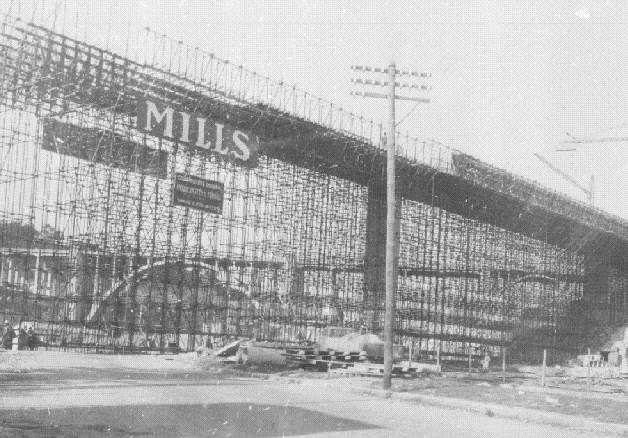
Photo: Arquivo Municipal de Lisboa

Photo: Arquivo Municipal de Lisboa
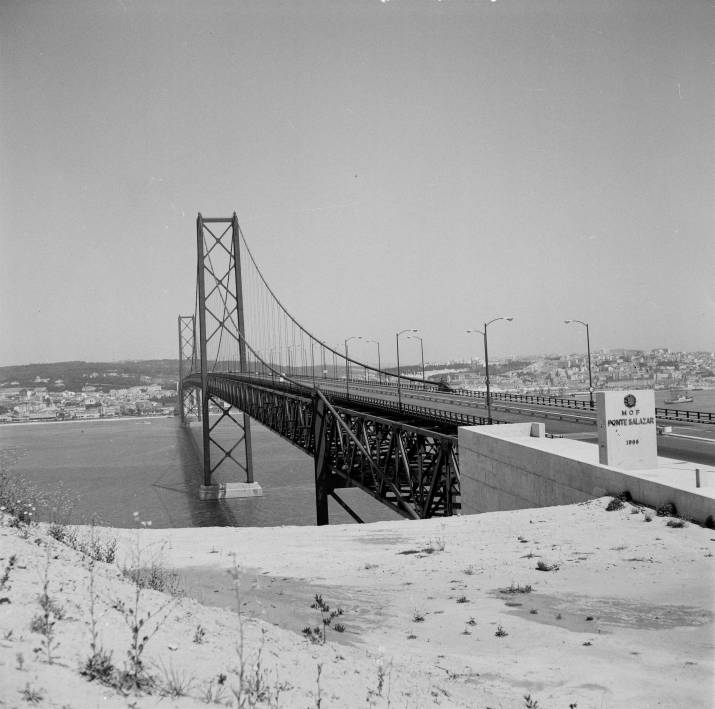
Photo: Arquivo Municipal de Lisboa

 valk|fisher
Leave a comment